
WhitepaperRWX
Real businesses. Open markets. Verifiable participation.
Contents 11 sections
Real World Exchange: tokenizing real businesses
Real World Exchange (RWX) connects real businesses and users through tokenization on Base. The platform gives companies a path to issuing their own tokens, establishing an open market and creating participation programs linked to their actual business activity.
- 01Real businessApplication & terms
- 02Initial offeringParticipation with RWX
- 03Project tokensAllocation & vesting
- 04Open marketRWX / project token
Launch model; execution and evidence are disclosed for each project. LP locking does not fix the market price.
Any business can apply for tokenization. Following review and agreement on its terms, a project can use tools for an initial offering, token distribution, gradual unlocking and reward programs. Users access these projects through the platform's common RWX token and a shared interface.
Initial offering and token distribution
In the RWX model, users contribute RWX to a business project's initial token offering. They receive an allocation of project tokens under the smart contract's published rules. Participation requires a compatible wallet and the necessary RWX, subject to that offering's conditions.
Allocations and release schedules are defined before participation. Linear unlocking, or vesting, makes tokens available gradually. Participants can check their contribution, allocation and claimable amount onchain.
Initial liquidity and permanent locking
Under the platform model, 100% of the RWX collected in an initial offering goes into initial liquidity for RWX / project token, together with the project tokens allocated to that market. These RWX establish a market; they are not unrestricted operating cash for the company.
The resulting LP tokens, which represent the right to withdraw that liquidity, are sent to 0x000000000000000000000000000000000000dEaD. This is commonly called burning LP tokens. The underlying assets remain in the trading pool, while the team loses the ability to use those LP tokens for a standard liquidity withdrawal.
This locks that particular LP position permanently, with no return date. Pool creation, deposited assets and the LP transfer can be checked through public transactions.
Users can sell unlocked project tokens under the pool's prevailing market conditions. Locking LP prevents the team from withdrawing that position; it does not fix the price or guarantee an exit for any amount without slippage. Reserves, trading activity and transaction size still matter.
Rewards funded by real business activity
After launch, a company allocates part of the income from its actual business activity to its project's reward programs. In this economic model, rewards originate from sales, services and other company activity.
Allocated assets enter the relevant pools. Smart contracts distribute funded rewards according to published participation rules. Each project separately discloses the share of income allocated, funding frequency, payout assets and eligibility. Simply holding a token does not replace a program's participation requirements.
Onchain funding and distributions can be verified publicly. Offchain revenue needs separate business reporting; a smart contract does not verify it by itself.
What businesses and users receive
Businesses receive infrastructure for token issuance and offerings, market formation, community participation, scheduled distribution and funded reward programs with verifiable rules.
Users can choose real business projects, participate through RWX, receive project tokens on a transparent schedule and join reward programs. They control unlocked tokens through their wallets and can trade them on available markets.
The project's own documents define token-related rights and company obligations. Tokenization alone does not convey company shares or ownership of its property.
Website: rwxplatform.com. Network: Base mainnet, chain ID 8453. Platform token: RWX, ERC-20, 18 decimals.
Platform structure and project launches
RWX brings project preparation, launch and ongoing participation into a common process. Businesses gain reusable infrastructure; users gain a comparable view of each company's activity, token terms and reward arrangements.
Illustration: 10% at launch + 90% linearly over 12 months. These are example project parameters, not an RWX release schedule.
Move the slider to explore the example. Each project publishes its actual allocation and release terms before participation.
Information before participation
Tokenization Hub is the entry point for business applications and information review. Before an offering, the platform model calls for disclosure of:
- Business activity, responsible team and official contacts.
- Token purpose, supply and distribution.
- Offering conditions, allocation calculations and unlocking schedule.
- Initial market parameters and evidence of the LP position lock.
- Reward funding sources, participation rules and reporting policy.
- Contract addresses, administrative powers and configurable parameters.
A common interface helps users compare projects without making their economics identical.
Launch lifecycle
| Stage | Work involved | What a user can check |
|---|---|---|
| Preparation | Application review, business description and agreed parameters | Documents, contacts and announced terms |
| Contract setup | Token, offering, vesting and required pools | Addresses, available source code, settings and permissions |
| Initial offering | RWX contributions and participation accounting | Personal contribution, total participation and allocation |
| Market launch | Initial liquidity and LP transfer to the dead address | Trading pair, deposited assets and confirming transactions |
| Unlocking | Token claims according to the schedule | Available, already claimed and remaining tokens |
| Reward programs | Stream funding and distributions | Pool funding, accrual settings and payments |
This is the launch model. The contracts of each project determine which stages are automated. Business preparation and agreement on terms involve the team.
Project workspaces and responsibilities
Each project has its own token, market, pools, budgets and participation terms. Separate workspaces organize balances, staking, farming and reward information. Switching a workspace does not move assets or activate another project's program.
The company is responsible for its business information, obligations, revenue reporting and funding policy. The platform supplies infrastructure and publishes applicable rules. Users choose whether to participate, manage their wallets and review contracts and conditions.
Current implementation and development
The site provides wallets, exchange and charts, staking, liquidity farming, LRWX and NFT boosts, vault information and project application tools. Tokenization Hub currently collects applications for review; it is not a universal automatic launch system for any business.
Further development is intended to standardize preparation and support of companies. New mechanisms must be checked against the announced economic rules before use with real assets.
RWX utility and tokenomics
11 Nov 2026 · block 56,050,751. Current balances, not target allocations or a circulating-supply calculation. Managed vaults are not time-locked.
A common ecosystem asset
RWX connects initial offerings, project markets and participation programs. Each business issues its own token; RWX is the shared asset for participating in offerings and interacting with ecosystem markets.
| Use | Economic role |
|---|---|
| Initial offerings | Contribute RWX for an allocation of project tokens under that project's rules |
| Initial markets | Pair collected RWX with project tokens under the model in section 1 |
| Trading pairs | Asset in RWX / ETH and RWX / project-token markets |
| RWX staking | Participate in pool reward programs and accrue LRWX |
| Liquidity farming | Provide assets to a trading pair and deposit the resulting LP tokens |
Base network fees are paid in ETH. Swap fees and program conditions belong to the relevant contracts; they are not a transfer tax built into RWX.
RWX contributed to an offering is not burned: it becomes part of initial pool reserves. Burning LP tokens locks the withdrawal right for the corresponding position. Burning RWX itself is a different operation.
Token issuance and properties
| Parameter | Verified value |
|---|---|
| Name and symbol | Real World Exchange · RWX |
| Network and standard | Base · ERC-20 |
| Decimals | 18 |
| Initial issuance | 1,000,000 RWX, issued once to the deployment address |
| Further issuance | Not provided by the token code |
| Token administrator | Not provided by the token code |
| Transfer tax | Not provided by the token code |
| Burning | Holders can burn their own RWX using burn() |
The verified source was obtained from Sourcify with an exact match; its runtime bytecode matched the code read on Base. The token has no reminting, adjustable transfer tax, address blacklist or administrative seizure of other holders' tokens. This describes token properties, not an independent audit conclusion.
At Base block 56,050,751, 11 November 2026, 12:35:25 UTC, totalSupply was 999,990 RWX. The difference from initial issuance was 10 RWX removed through burning. RWX balances at the zero and dead addresses were zero at that block; LP tokens are accounted for separately.
RWX and LRWX are different assets. Minting loyalty tokens does not increase RWX supply. RWX-denominated rewards use existing RWX.
Distribution for the protocol
The team and founder have no separate personal allocation of the initial RWX issuance: their allocation is 0%. The initial issuance is intended for the protocol economy and its funds.
This is an initial distribution policy. RWX subsequently circulates through markets, offerings and reward programs, so it need not remain entirely in protocol funds.
Under the stated policy, fund-held RWX is not intended to be sold for the team's or founder's personal cash withdrawal. Company management of funds is separate from a personal token allocation.
Funds and the balance snapshot
| Fund | RWX at block 56,050,751 | Share of initial issuance |
|---|---|---|
| Liquidity | 404,955 | 40.4955% |
| Rewards | 200,050 | 20.0050% |
| Reserve | 100,000 | 10.0000% |
| Ecosystem | 96,000 | 9.6000% |
| Development | 72,900 | 7.2900% |
| Community | 100,000 | 10.0000% |
| Total in six vaults | 973,905 | 97.3905% |
These are dated balances, not approved original allocation percentages. Another 26,085 existing RWX were held at other addresses, including pools, contracts and wallets. This difference is not a circulating-supply calculation.
At the checked block, all six vaults were controlled by 0xF9785dFA8A7673F4a16561451cC5eE72eb99AcA3. Their checked code allows owner withdrawals without a time lock. They are managed funds, not permanently locked tokens.
Fund names and balances do not establish target allocations or spending restrictions. Fund purposes, initial or target shares, spending rules and reporting are separately disclosed. The stated policy and technical contract permissions are distinct; vault code does not itself enforce purpose-specific spending.
Supply, circulation and unlocking
Initial issuance is the amount created at deployment. totalSupply is the existing amount after contract burns. Circulating supply needs its own methodology for funds and other addresses, including the reason for each exclusion.
RWX itself has no vesting mechanism. Availability depends on the holding address and its contract rules. Linear unlocking of project tokens does not imply the same lock for RWX.
Team income and funding RWX
The team's model is based on protocol activity and participation in ecosystem projects. It may evaluate a business, participate in its offering, receive that project's tokens and use its staking or farming programs. Income depends on the project's performance and program terms.
Part of the profit from this participation is intended to fund RWX programs. This connects ecosystem activity to support for the protocol, rather than selling a separate team allocation of RWX.
The share, transfer frequency and receiving programs require separate disclosure. The model does not give every RWX holder an automatic fixed claim on each company's income. Payments follow funded program conditions. A business onboarding or service fee has not been defined here as a revenue source.
Project markets and RWX
Initial project markets use RWX pairs, expanding its utility as a participation and reserve asset. Business development and demand for project tokens may support trading and RWX use. However, each asset has its own market: project-token growth does not automatically or proportionally increase RWX's price.
Market appreciation is also distinct from distributed profit. Rewards require actual funding. Locking an initial LP position does not by itself pay separate income to the team or RWX holders.
Reward programs
RWX staking



RWX liquidity farming
Business income / protocol budget → actual pool funding → accrual → user claim.
Economic sources
In the platform model, businesses allocate part of actual income to their projects' rewards. RWX programs may also receive part of the team's profit from ecosystem participation and allocations from existing protocol budgets.
Reporting must distinguish new business-funded contributions from distributions out of pre-existing budgets. A token payment alone does not prove the business earned income in that period. RWX collected for initial liquidity is not a reward budget. Trading fees earned by an LP position are separate from funded farming rewards and business income.
From business activity to a claim
- A business or ecosystem participant earns income from its activity.
- It allocates funds according to its disclosed policy.
- The administrator or authorized funder deposits a supported asset and sets a distribution period.
- The contract records participants' accrual under the program rules.
- Users claim the rewards available to them.
The contract does not debit a company's bank account or calculate its accounting profit. It distributes assets actually provided. Transparency therefore needs both onchain funding records and offchain financial reporting.
Supported programs
| Program | Position | Rewards |
|---|---|---|
| RWX staking | RWX deposit | LRWX accrual; funded USDC, ETH and UHAE |
| RWX farming | RWX / WETH LP deposit | Funded RWX, USDC, ETH and UHAE |
| Project programs | Assets specified by that project | Determined by its contracts and documentation |
Using a market or holding a token does not automatically enter a staking or farming program. A deposit into the applicable pool is required.
Distribution by time and effective weight
Each funded asset has its own budget and stream duration. A position's effective weight equals its deposited principal multiplied by its applicable boost. Its share of the pool's total weight determines its share of distributed rewards over time.
Increasing a position's weight changes future distribution, not the fixed program budget or already accrued rewards. Other users' deposits, withdrawals and boosts can change the share.
Funding includes the remaining stream budget and restarts its duration under contract rules. Accrual uses integer token units: a very small budget over a long period can produce a zero per-second rate. For example, 1 USDC over 30 days is below one smallest USDC unit per second; this is not an APR display threshold.
LRWX is a separate loyalty mechanism
RWX staking records loyalty accrual from principal and time under its configured rate. The authorized staking contract mints LRWX when claimed; it does not require a prefunded LRWX reward stream.
LRWX boosts do not amplify LRWX accrual. LRWX is not treated as USDC-valued cash income in the site's total APR or reward valuation. Its mint permissions and future governance role are addressed separately.
Claims and program boundaries
Users may claim a supported reward separately or use claim all. Claims deliver the reward assets; they do not automatically convert them into USDC.
When a funded stream ends, new accrual from it ends, while recorded claimable rewards remain subject to the contract's rules. Claims, principal withdrawals and boost withdrawals are distinct operations. Changing positions does not retrospectively reallocate rewards already accounted for.
Rewards are limited by actual funding and program terms, not guaranteed by a displayed annual rate. Sources, tokens, distribution periods and funder permissions must be considered for each program.
Linear LRWX boost and NFT
Initial settings · weight illustration without NFT. No deposit is made. A weight multiplier is not a guaranteed reward multiplier.
 Common+3% weight
 Rare+5% weight
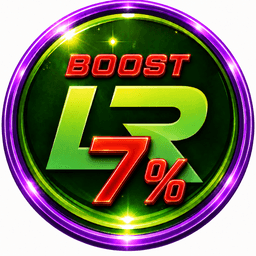 Heroic+7% weight
 Epic+10% weight
Bonuses add together. One active NFT per wallet per pool; LRWX and deposited NFTs are withdrawable. Administrators can change pool settings.
What a boost changes
LRWX and Boost NFT increase a position's effective weight in a particular pool:
Position weight = deposited principal × boost multiplier.
A deposit of 100 RWX at ×1.5 has weight 150, but the principal remains 100 RWX. No additional principal or LP tokens are created. Zero principal means zero weight even when boost assets are deposited.
Linear LRWX boost
Deposit LRWX into the chosen pool to activate the bonus. LRWX merely held in a wallet does not count.
The initial settings are 10,000 LRWX per wallet per pool, giving a maximum +100% weight bonus. The bonus grows linearly between zero and that cap.
| LRWX deposited | Weight bonus | Multiplier without NFT |
|---|---|---|
| 0 | 0% | ×1 |
| 1,000 | 10% | ×1.1 |
| 2,500 | 25% | ×1.25 |
| 5,000 | 50% | ×1.5 |
| 10,000 | 100% | ×2 |
Positive fractional deposits are possible within token precision and contract arithmetic. Additional deposits accumulate, subject to the active cap.
Boost deposits do not burn LRWX. The tokens remain recorded in the contract and can be withdrawn partly or completely. Withdrawal reduces future weight while preserving already accounted rewards. Depositing more does not increase past rewards.
NFT boost
Deposit one supported Boost NFT into the pool. Initial category bonuses are:
| Category | Weight bonus |
|---|---|
| Common | +3% |
| Rare | +5% |
| Heroic | +7% |
| Epic | +10% |
Only one NFT unit per wallet per pool counts at a time. Multiple NFTs do not stack in that position. Withdraw an active NFT before replacing it. A normal boost deposit does not destroy the NFT; it can be withdrawn.
Combining LRWX and NFT
The current formula adds the bonuses:
Multiplier = 1 + LRWX bonus + NFT bonus.
5,000 LRWX and a Rare NFT give ×1.55, so 100 RWX has weight 155. At the initial settings, 10,000 LRWX and an Epic NFT give ×2.10. These are examples at those settings, not immutable future limits.
Weight versus reward share
A personal weight increase also changes the pool's total weight. The weight multiplier is therefore not a guaranteed income multiplier.
Consider two wallets with 100 RWX each and an unchanged 100 USDC budget for an interval. The second wallet has no boost. Each row is a separate scenario for the first wallet:
| First wallet's boost | Weight | Reward share | Example reward |
|---|---|---|---|
| None | 100 | 50% | 50 USDC |
| 5,000 LRWX | 150 | 60% | 60 USDC |
| 5,000 LRWX + Rare | 155 | ≈60.78% | ≈60.78 USDC |
| 10,000 LRWX + Epic | 210 | ≈67.74% | ≈67.74 USDC |
The budget stays 100 USDC in every row. Contract rounding applies. A sole participant already receives the entire distributed budget; more weight cannot increase it. If all participants increase weights proportionally, their shares stay the same.
Eligible rewards
RWX staking boosts funded USDC, ETH and UHAE rewards. It does not boost LRWX accrual, which depends on RWX principal, time and the loyalty rate.
RWX farming boosts funded RWX, USDC, ETH and UHAE. Project programs define their own supported assets and rules. Boosts change distribution rather than reward budgets or RWX issuance.
LRWX and NFT deposits are accounted for separately in each pool. A boost deposit into staking does not activate it in farming. The same deposited NFT unit cannot be in two pool contracts simultaneously.
Configurable settings and preserved accrual
Administrators can configure the LRWX cap, maximum linear bonus and NFT bonuses. The tables show initial settings; the actual pool contract determines current values.
Configuration changes checkpoint accrued rewards and recalculate weights in batches. During that specific recalculation process, funded reward streams are frozen and the end of still-active streams is extended accordingly. An ordinary pause is not the same procedure and does not necessarily halt every accrual mechanism. LRWX staking issuance has separate accounting.
If the cap is reduced below an existing LRWX deposit, the excess stays recorded and withdrawable, but adds no weight above the new cap.
Actual APR and the educational slider
Actual APR depends on funded streams, personal and total weight, prices and principal. Other participants and funding changes affect it.
The card slider is a simplified ×1–×2 illustration applied to boost-eligible displayed APRs. It does not reproduce all pool-denominator changes, does not include NFT bonuses in its scale and does not amplify LRWX issuance. It is not an exact promise of the result of depositing that LRWX amount.
Dragging changes only the preview. Releasing restores actual values. A real boost change needs a separate deposit or withdrawal confirmed through the wallet.
APR, prices and reward valuation
Assumes unchanged prices and accrual. The annualized rate does not promise funding for 365 days.
What APR means
APR annualizes a current accrual rate without automatic compounding:
APR = annualized reward value ÷ position value × 100%.
The calculation uses 365 days. A 1,000 USDC position earning the equivalent of 1 USDC a day has a 36.5% APR. If only 30 days are funded, that example distributes 30 USDC, or 3% of principal, over those days. It does not promise a full year of funding.
Base, personal and token APRs
Base APR uses current prices, reward streams and total effective pool weight. It is not a hypothetical pool in which every participant has no boost.
Personal APR uses the account's actual accrual rate relative to its principal value. Normal token APR tiles show base rates; the personal total is displayed separately. While the educational slider is dragged, eligible token tiles and the preview total change together, then restore on release.
LRWX's token accrual APR is different from a USDC return. At 1 LRWX per RWX per 30 days, annualized token accrual is approximately 1,216.67%. LRWX has no assigned cash price in this calculation, so that figure is excluded from the USDC-valued total.
Why rates change
Reward funding, stream duration, remaining budgets, deposits, withdrawals, boosts and asset prices change the displayed rate. A boost changes a participant's share of a funded stream, not the stream's total budget. After a stream ends, its future reward rate stops unless it is funded again.
APR is an estimate at current conditions. A high percentage on a small position does not imply a large payment, and a historical value does not fix future results.
Price inputs
| Asset or position | Valuation basis |
|---|---|
| RWX and project tokens | Price and market-history sources used by the site |
| ETH | Derived from RWX price and RWX / WETH reserve ratio |
| USDC | Approximately 1 USD for display; not a separate fiat exchange-rate feed |
| UHAE | Administrator-configured reference rate |
| LRWX | No cash valuation in the total |
| LP tokens | Proportional value of the underlying pair reserves |
Low liquidity, missing or delayed data and changing reserves affect estimates. A displayed price is not a guaranteed execution quote for a particular trade size.
UHAE reference rate
The initial reference is 1 USDC = 44.5 UHAE, so one UHAE is valued at approximately 1 ÷ 44.5 USDC. The administrator can update the rate. It is a calculation input, not an automatic redemption promise or market price guarantee.
Accrued reward value
The displayed USDC estimate sums each claimable reward amount multiplied by its available reference price. LRWX is excluded. Where some assets lack a price, the estimate must indicate incomplete valuation; a missing price is not a zero-value asset.
Very small positive amounts may display as less than 0.01 USDC. A dash indicates unavailable data, while zero indicates a calculated zero. Claiming transfers reward tokens, not their displayed USDC equivalent.
Exclusions and calculation limits
APR excludes wallet network fees, swap fees and slippage, impermanent loss and the cost of obtaining LRWX or NFT boosts. Liquidity fees are separate from the displayed funded-reward APR.
Contract amounts use integer arithmetic and token decimals. A tiny funding budget may round its per-second emission to zero; the interface can show this before funding. Previews describe assumptions, not a guarantee that an arbitrary transaction will execute at the displayed valuation.
Project ecosystem and common onboarding rules
RWX is the shared protocol; each business is a separate project with its own token economy. The platform whitepaper describes common infrastructure and principles rather than tying the protocol to a particular company.
Common infrastructure, independent economics
| Protocol layer | Individual project layer |
|---|---|
| RWX as a shared participation and market asset | Business activity, management and obligations |
| Interface, wallet and contract tools | Project token, supply and distribution |
| Offering and liquidity model | Specific offering and vesting conditions |
| Supported pool and boost mechanisms | Reward assets, funding share and program periods |
| General disclosure principles | Business reports and evidence of funding |
Adding a project does not make all companies share one budget, profit source or token rights. A reward in one project does not imply an entitlement in another. The platform's common tools do not guarantee a company's commercial performance.
Project-specific documentation
Each business publishes its own description and, where applicable, whitepaper, contracts, offering terms, unlocking schedule, initial liquidity evidence, reward policy and reporting. Business claims need that project's evidence, rather than assumptions based on shared branding or interface design.
Keeping the ecosystem current
The website's project directory and workspaces contain the changing list of companies, their links and contract addresses. A new company does not require rewriting this protocol whitepaper. Changes to common RWX economics or governance do require the relevant sections to be updated.
Protocol governance and participant voting
Team management
Deployed roles and administrative permissions.
LRWX voting
Requires eligibility, issuance controls, execution rules and transfer of powers.
Current stage: team management
The team currently makes protocol-management decisions and exercises the administrative powers of relevant contracts. These include configurable pool settings, funding permissions and managed funds, within each contract's capabilities.
RWX's lack of a token owner does not remove administrative rights in pools, vaults or LRWX. Those rights have not been transferred to an operating user-voting system.
Intended model: governance through LRWX
The future model is to move defined protocol decisions to participant voting using LRWX loyalty tokens, rather than the RWX held in managed funds as voting power.
The objective is participation by users and projects that stake RWX over time and obtain LRWX, linking governance to sustained protocol activity. Holding RWX in a treasury is not intended, by itself, to provide voting control.
Eligibility and the transition
This is a future model, not a currently active DAO. Voting eligibility, proposal rules, vote accounting, quorum, execution and the allocation of residual operating powers need separate design and publication. No automatic one-token-one-vote rule or transition date is established here.
The current LRWX is transferable and can be minted by authorized roles. A balance alone therefore does not prove that all tokens came from that holder's own staking. Existing mint and administrative permissions also mean the future restriction on team control is not yet technically enforced.
Before making that claim, the protocol must implement and verify eligibility, issuance controls, rights accounting, handling of fund assets and transfer of the relevant administrative powers. Voting without that transfer does not itself eliminate unilateral control through existing roles.
Until the transition is actually implemented, management remains with the team. The decision scope, transition process and retained operational permissions must be disclosed separately.
Limitations and risks
RWX connects onchain mechanisms to real business activity. Contract transparency helps verify transactions, but it does not eliminate business, market or technical risk.
Business performance and reward funding
A company's sales, costs, profits and ability to fund programs may change. Rewards depend on actual funding, not solely on the existence of its token or a displayed APR. Offchain financial information depends on the quality and accuracy of company reporting.
Token rights and company obligations are defined in project documents. A token is not automatically company equity, a property title, a deposit or an unconditional claim on revenue. Applicable requirements depend on the project and participant.
Prices and market exits
RWX, project tokens and reward assets may lose value. Low liquidity increases price impact, spreads and slippage. Burning LP tokens locks that position's withdrawal right, not the reserves against trading or the token price. It does not guarantee that every holder can sell any amount on acceptable terms.
Liquidity provision
LP positions are exposed to changing reserve ratios and impermanent loss relative to holding the assets separately. Funded farming rewards and trading fees may not offset that effect. Unlocking a user's farming deposit is distinct from the permanent lock of a project's initial LP position.
Contracts and implementation security
Smart contracts can contain errors, vulnerable dependencies or unintended interactions. Verified source code makes code inspectable; it is not proof of safety or an independent audit. A review of a dependency is not an audit of the entire RWX protocol.
This document does not link public independent audit reports. Where checks or audits are disclosed, their contract version, scope and results should be identified.
Administrative powers and funds
Administrators can act within deployed roles and permissions, including managing funds and configurable programs. The no-personal-allocation policy does not technically time-lock the fund balances. Policy commitments and code-enforced restrictions must be distinguished.
LRWX minting and role management affect future governance design. The intended transition does not remove current powers in advance of implementation. Users should review the actual contract owner, roles and configurable settings.
Rewards, boosts and estimates
Streams are finite. Rates and personal shares change as assets and pool weights change. Boosts redistribute funded rewards rather than creating unlimited returns. LRWX token accrual is not a cash yield. USDC valuations, market prices and the manual UHAE rate are estimates rather than guaranteed conversion proceeds.
Wallets, network and services
Transactions depend on wallet permissions, correct network selection, sufficient gas, RPC access and Base operation. A cancelled or reverted transaction does not complete the requested action. Approval and an action may require separate confirmations where atomic wallet batching is unsupported.
RPC providers, hosting, databases and notification services may suffer outages or quota limits. Monitoring and notifications can be delayed; a missing notification does not establish that no onchain transaction occurred. Users retain responsibility for wallet and recovery-key security.
Versions, participation and plans
New pool versions do not automatically transfer old deposits. Migration steps and addresses need to be checked separately. Participation conditions may differ between projects. Roadmaps, future governance, external listings and business results are not guaranteed outcomes.
Development and disclosure
The development approach distinguishes available tools from future goals. A source file, deployment, successful test and independent audit are different milestones.
Available technical foundation
| Area | Available functionality |
|---|---|
| Workspace | Project selection, wallet connection, Base switching and three interface languages |
| Markets | Exchange, charts and balances |
| RWX programs | Multi-reward staking and liquidity farming |
| Boosts | Linear LRWX deposits, supported NFT boosts and previews |
| NFT | Puzzle parts, assembly and supported Boost NFT collection |
| Funds | Vault information and administration within contract permissions |
| Applications | Tokenization Hub business application interface |
| Monitoring | Swap records and transaction notifications |
Some stages of project preparation remain subject to manual review. The available interface is not proof that every future business launch is fully automated.
Publication and ecosystem work
Ongoing work includes multilingual protocol documentation, project-specific disclosures, fund policies, reporting on profit contributions to RWX programs, official contact channels and information submissions to token aggregators.
These tasks do not mean that every channel already exists or that an application or listing has been approved. Official links and actual statuses must be published as they become available.
Tokenization tools
The direction is standardized business information, offering terms, contracts, distribution and reward reporting, with gradual automation of verifiable stages. New mechanisms must match disclosed economics and be checked before use with real assets.
Priorities are correct accounting, understandable operations, infrastructure reliability and clear administrative powers. New companies require their own documents and program configuration. This whitepaper promises no fixed future number of projects or launch dates.
LRWX governance development
Participant voting remains a separate future workstream. Eligibility, issuance control, proposals, voting and execution rules, and transfer of powers must precede activation. Existing LRWX and loyalty programs do not themselves constitute decentralized governance. No voting parameters or launch date are fixed here.
Reporting progress and changes
Updates should state actual status: planned, in development, under review, operational or deferred. These labels describe a disclosure format, not an assertion that a separate roadmap-tracking system is already live.
An implementation announcement should identify what changed, for which contracts or programs, when it became available and whether users need to act. Material reward, boost, fund-policy and governance changes belong in the documentation and official announcements.
When a contract is replaced, disclose the new address and version, treatment of old positions and migration steps. Prior implementations should remain documented for historical users.
Information to disclose
| Category | Information |
|---|---|
| Contracts and permissions | Network, purpose, address, source version, verification, roles and configurable settings |
| RWX and funds | Dated supply and balance snapshots, fund purposes, material transfers and spending rules |
| Rewards | Funding source and policy, actual contributions, stream periods and distribution rules |
| Offchain income | Calculation basis, contribution share, frequency and supporting reports |
| Estimates | Price sources, assumptions, manual UHAE rate and valuation limits |
| Security and changes | Checks performed, audit scope where available and changes affecting users |
Changing figures need a date and, where relevant, a block. A balance snapshot is not an immutable allocation. Financial reporting frequency and contribution rules require separate approval.
Document versions and the limits of plans
This whitepaper describes the protocol and common economic model. The website separately maintains project lists, documents and addresses. Published versions should have a date, version and record of material changes, preserving previous versions.
Plans may change following development, checks, business performance or service availability. Changes to announced priorities or timelines should be disclosed. Listings, partnerships and business outcomes also depend on external parties. A roadmap does not guarantee returns or token-price growth.
Principal contract addresses
The following registry covers RWX infrastructure, supported assets and market integrations on Base mainnet, chain ID 8453. BaseScan links provide transaction history and contract information.
The registry was checked against the site configuration on 11 November 2026. All 22 listed addresses had runtime code at block 56,087,097, 14:36:35 UTC. Related staking, farming, pair assets and router WETH getters were also checked. This verifies addresses and relationships, not the safety of every implementation or immutable administrative permissions.
Project-specific tokens, offerings and pools are documented in the corresponding project's materials and workspace.
Protocol tokens
| Contract | BaseScan address | Purpose |
|---|---|---|
| RWX | 0xA00FBee3DE47053F3eE55bC19AaB8Dbc57AE591a | Core ERC-20 asset for offerings, trading pairs and RWX participation programs. |
| LRWX | 0xed1244B4b215aA9AA9dd10441bfF5562cE3d6dB1 | Loyalty ERC-20 earned through RWX staking and used in supported boosts. Governance use is a future model. |
Staking, farming and the RWX trading pair
| Contract | BaseScan address | Purpose |
|---|---|---|
| RWX staking V2 | 0x1A829413ea116b1981133CfE7bDeC1630801cC47 | RWX deposits, LRWX accrual and funded USDC, ETH and UHAE rewards, with LRWX and NFT boosts. |
| RWX farming V3 | 0x2BF238594654dc33141A0EcB6F19d7a430706BBe | RWX / WETH LP deposits and funded RWX, USDC, ETH and UHAE rewards with boosts. |
| RWX / WETH pair and LP token | 0x1dC9De011f60EbFc870754Cab99Ce68b3d474127 | Pair reserves and LP tokens representing liquidity shares; the LP is used by RWX farming. |
V2 and V3 here are versions of RWX staking and farming contracts, not DEX versions. The pair follows a Uniswap V2-compatible model. The interface may call it RWX / ETH, while its contract asset is WETH.
Boost NFT and NFT creation
| Contract | BaseScan address | Purpose |
|---|---|---|
| Boost NFT | 0x129942371e57BB6023099543c7EaB09D008Cd1D6 | ERC-1155 boost collection. Pool contracts determine category weight bonuses. |
| Puzzle parts | 0xa6CFBac4215628ED8d86f387491c013a6EA8aC14 | ERC-1155 parts used to assemble Boost NFTs. |
| Puzzle part minter | 0xD256D5D5cD46d373fe87C43bec3D36e91dA9ce5C | Mints puzzle parts for LRWX under current mint settings. |
| Forge — NFT assembly | 0xE64447896D12FDd6c061b6849CA5DC75e0c14a8A | Consumes and burns a complete set of parts and issues a Boost NFT under its implementation rules. |
Minting puzzle parts, assembling an NFT and depositing it in a pool are separate operations. Ownership alone does not activate its boost.
Managed protocol funds
| Contract | BaseScan address | Purpose |
|---|---|---|
| Liquidity fund | 0x74824aedaA97e4966C4d092716512392e7d07b02 | Managed RWX allocated to liquidity activity. |
| Rewards fund | 0xAa51DFc6724a94D292D9FfDBA4eE936FCa5326ff | Managed RWX for funding reward programs. |
| Reserve | 0xc30CB9EF54269c3eDAC4Ab3084b4f1D240acDdA0 | RWX reserve fund. |
| Ecosystem | 0x9369D485fAb5314524C0a55eD670Cd6d077DA82D | Funds for ecosystem development. |
| Development | 0xF2fa2bD89b3AdB59F504D990f467966352b551b1 | Funds for technical and platform development. |
| Community | 0x8c773978Ff3013A4f5DDf73C4AfFA0aa3c5606b5 | Funds for community programs. |
| LRWX treasury | 0xDe3495d7B2b585E177A42ddbFdC9640C4d327957 | Separate managed LRWX vault. |
Fund purposes do not by themselves create a time lock or enforce spending policy. The liquidity vault holds RWX; it is not evidence of an LP burn. Initial liquidity and lock evidence must be provided for each relevant pool.
Supported assets and market integrations
| Contract | BaseScan address | Purpose |
|---|---|---|
| USDC | 0x833589fCD6eDb6E08f4c7C32D4f71b54bdA02913 | Supported reward and exchange asset. |
| UHAE | 0xcb352448236F4A9E2bC56fa8f59851c6a5a34256 | Supported reward asset; valuation uses the reference rate in section 6. |
| WETH | 0x4200000000000000000000000000000000000006 | Wrapped ERC-20 ETH used in trading pairs and routes. |
| USDT | 0xfde4C96c8593536E31F229EA8f37b2ADa2699bb2 | Asset supported by the exchange interface; not a current RWX pool reward. |
| Uniswap V2 Router02 | 0x4752ba5dbc23f44d87826276bf6fd6b1c372ad24 | Router used for supported swaps and liquidity operations. |
| Additional V2-compatible router | 0x327Df1E6de05895d2ab08513aaDD9313Fe505d86 | Router available for supported exchange routes; the operation determines the selected route. |
Native ETH is Base's native asset and has no separate ERC-20 address. WETH is the wrapped asset. Listing an asset or router does not guarantee every pair is available or that liquidity is sufficient for any trade size.
Registry maintenance
Addresses should retain their network, purpose and verification date. Code at an address does not prove safety, all current settings or the origin of funds. On replacement, publish the new version and address, and retain old implementations separately with guidance for earlier positions.